
When ordering custom plush toys from overseas manufacturers, many avoidable problems begin long before bulk production starts. For importers, brand owners, and product developers, understanding these common mistakes can help reduce sample revisions, avoid unexpected costs, and make the production process smoother.
These common mistakes can result in inaccurate pricing, repeated sample revisions, production delays, extra costs, and disappointing bulk production results. In this guide, we look at the most common mistakes importers make when ordering custom plush toys and how to avoid them more effectively.
In This Guide
- Quick Checklist Before Ordering Custom Plush Toys
- Requesting a Quote Without Enough Information
- Focusing Only on the Lowest Price
- Not Understanding MOQ Early Enough
- Sample Development and Approval Mistakes
- Fabric, Packaging, and Lead Time Mistakes
- Quality Control and Supplier Reliability
- Questions to Ask Before Confirming an Order
Quick Checklist Before Ordering Custom Plush Toys
Before placing a custom plush toy order, buyers should confirm the product size, quantity, target market, intended age group, fabric choice, decoration method, packaging style, safety requirements, sample approval process, and expected delivery timeline.
These details may seem basic, but they directly affect quotation accuracy, sample quality, production cost, testing requirements, and final delivery. A clear checklist helps buyers avoid many common mistakes before sampling even begins.
| Common mistake | What it often causes | Better approach |
|---|---|---|
| Incomplete quote request | Inaccurate pricing | Prepare size, quantity, artwork, packaging info |
| Focusing only on low price | Hidden differences | Compare materials, workmanship, communication |
| Ignoring MOQ early | Redesign or delay | Confirm MOQ before development |
| Approving samples too quickly | Bulk production issues | Review against approved requirements |
| Leaving packaging too late | Final-stage delays | Define packaging direction early |
1. Requesting a Custom Plush Toy Quote Without Enough Information
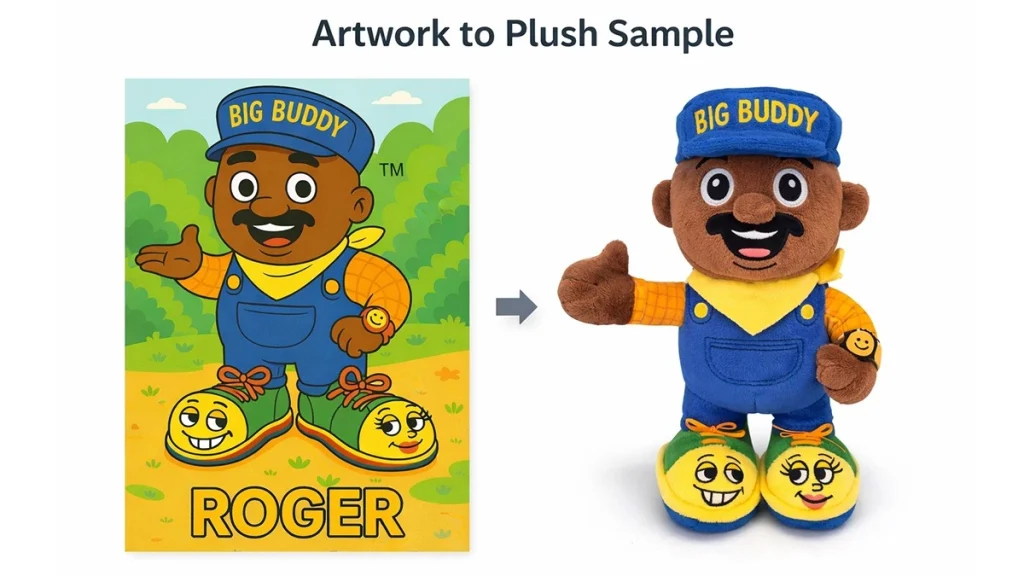
One of the most common mistakes buyers make is asking for a quotation without providing enough product details. Some buyers only send a short message saying they need a custom plush toy and want a price, but they do not include size, quantity, reference images, materials, accessories, packaging requirements, or target market information.
This makes accurate quotation difficult. A custom plush toy price depends on many factors, including size, design complexity, fabric type, embroidery, printing, accessories, packaging, and order quantity. When important details are missing, the manufacturer can only give a rough estimate, and that estimate may change later once the actual requirements become clear.
This also makes supplier comparison harder. One supplier may quote using simple assumptions, while another may include more complete specifications. Buyers may think they are comparing the same product, but in reality they are not.
A better approach is to prepare as much information as possible before requesting a quote. Reference images, approximate size, estimated order quantity, packaging ideas, and special requirements all help the manufacturer give a clearer and more practical quotation.
Before requesting a quote, buyers should try to confirm:
- reference image or artwork
- approximate size
- estimated order quantity
- target market
- fabric preference
- accessories
- packaging requirements
- expected timeline
You may also want to review what a plush toy manufacturer needs before quoting before sending your inquiry.
2. Focusing Only on the Lowest Price
Price is important, but making a decision based only on the lowest quotation is a mistake. In custom plush manufacturing, a lower price does not always mean better value. It may simply mean that the supplier is quoting different materials, lighter filling, fewer details, simpler packaging, or lower workmanship standards.
Two plush toy quotations can look very different because the assumptions behind them are different. One supplier may include logo embroidery, custom hang tags, and a more suitable fabric. Another may quote only a basic version of the toy without these features. If buyers compare only the final number without checking the actual conditions, they may make the wrong decision.
In some cases, the cheapest option leads to more problems later. Buyers may face quality issues, extra revision costs, poor communication, or unexpected production changes. These problems often cost more than the difference between the original quotations.
Instead of asking only which supplier is cheapest, buyers should ask which supplier understands the project clearly, responds professionally, and can deliver the required quality consistently.
3. Not Understanding MOQ Early Enough
MOQ, or minimum order quantity, is one of the most important factors in custom plush manufacturing, but many buyers do not discuss it early enough. Some assume that any custom plush design can be made in very small quantities, only to discover later that the project’s actual MOQ is higher than expected.
MOQ usually depends on product size, structure, material choice, accessories, printing, embroidery, and packaging requirements. A simple plush toy may allow more flexibility, while a complex or highly customized design may require a higher MOQ to make production practical.
If MOQ is discussed too late, buyers may spend time developing a product concept that does not match their real budget or quantity expectations. This often causes redesign, delay, or frustration.
A better approach is to discuss MOQ at the beginning of the project. Buyers should understand whether their design fits small-scale development, medium-volume ordering, or larger production planning.
For more detail, see our guide to custom plush toy MOQ.
4. Expecting the First Sample to Be Perfect
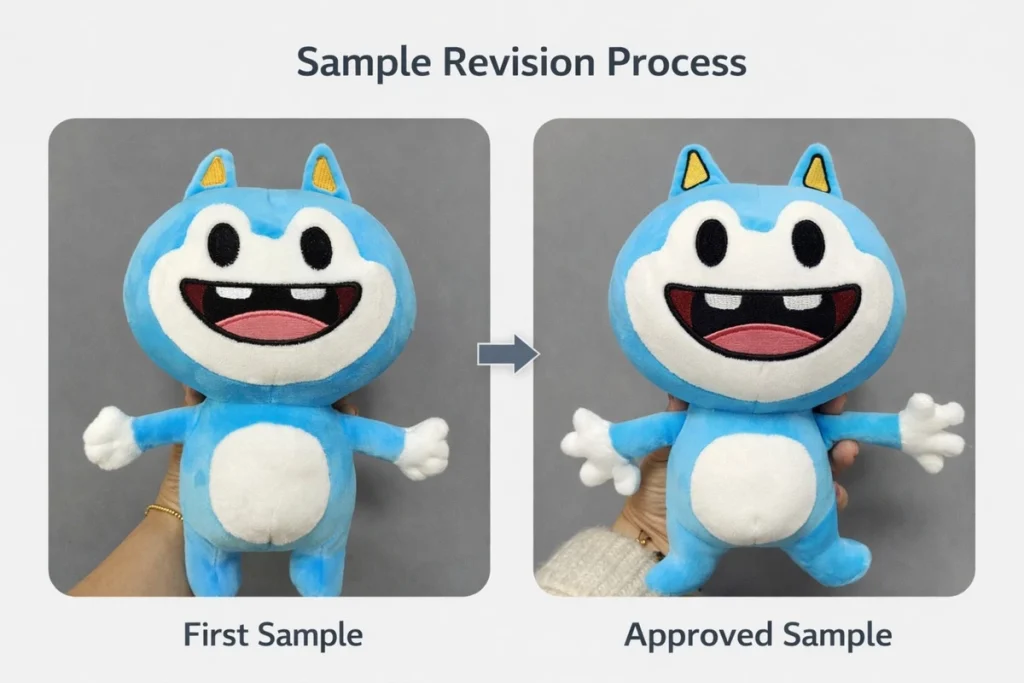
Another common mistake is expecting the first plush toy sample to be the final version. In reality, custom plush sampling is usually a development process. Even with clear artwork and product requirements, the first sample may still need adjustments in shape, color, embroidery, accessories, fabric selection, or overall proportions.
This is especially true for character plush, mascot plush, and other custom projects based on 2D artwork. Turning a design into a soft, production-ready 3D plush toy often takes some testing and revision.
When buyers assume the first sample should already be perfect, they may become disappointed too quickly or misunderstand the purpose of sampling. The sample stage is not only about making the toy. It is also about checking whether the concept works well in actual plush form.
A better mindset is to treat the first sample as part of the refinement process. Buyers should review it carefully, give clear feedback, and allow space for adjustment where necessary.
5. Approving the Sample Too Quickly
If mistake #4 is expecting too much from the first sample, mistake #5 is the opposite: approving a sample before checking enough details. While some buyers expect too much from the first sample, others make the opposite mistake by approving the sample too quickly. Once the sample is confirmed, the factory usually uses it as the main reference for bulk production. If important details are missed at this stage, those problems may continue into mass production.
Buyers sometimes approve a sample without checking details such as facial expression, embroidery placement, printed colors, fabric tone, stuffing firmness, stitching quality, accessory attachment, label position, or packaging instructions. Even small issues can become significant when repeated across hundreds or thousands of pieces.
Sample approval should never be rushed. It is one of the most important checkpoints in the entire custom plush toy process. A careful review at the sample stage usually saves much more time and cost later.
A better approach is to compare the sample carefully with the original design and confirm every important requirement before giving final approval.
You may find our article on custom plush toy sample approval before mass production helpful here.
6. Ignoring Fabric and Material Suitability
Many buyers pay close attention to design appearance but not enough attention to material suitability. This can cause problems because different plush fabrics behave differently in production and in the finished product.
A material that looks good in a reference image may not be the best choice for embroidery, printing, softness, durability, or production consistency. Some fabrics support sharper visual details, while others are better for softness and touch. Some are more suitable for promotional plush, while others are better for baby soft toys or retail gift products.
If buyers choose materials only by appearance, they may later find that the toy does not feel right, the embroidery does not look clean, or the product is harder to manufacture consistently in bulk.
A better approach is to discuss material selection during the sample stage. Buyers should ask which fabrics are most suitable for the product’s use, appearance, and market positioning.
For more practical advice, see our guide to the best fabrics for custom plush toys.
7. Underestimating Production Time
Another common mistake is underestimating how long a custom plush toy project really takes. Some buyers assume that once the sample is approved, production will move immediately and shipping will follow quickly. In practice, the full process usually includes quotation, sample development, revisions, material sourcing, production scheduling, manufacturing, inspection, packaging, and shipment.
Lead time also depends on order quantity, product complexity, material preparation, and the factory’s production schedule. During busy seasons or before major holidays, lead times may be longer than expected.
When buyers do not plan enough time, they may create unrealistic launch schedules, event deadlines, or retail delivery expectations. This can create unnecessary pressure and lead to rushed decisions.
A better approach is to discuss timing early and build some flexibility into the project schedule. Buyers should ask about both sample timing and mass production lead time before finalizing important deadlines. If timing is important for a product launch, event, or retail program, you may also want to review our guide on how long it takes to manufacture custom plush toys.
8. Leaving Packaging Decisions Until the End
Packaging is often treated as a small final detail, but this is a mistake. In custom plush toy projects, packaging should be considered earlier because it can affect cost, materials, production planning, carton arrangements, and final shipment timing.
Many buyers focus only on the plush toy itself and delay decisions about hang tags, poly bags, barcode labels, gift boxes, display packaging, warning labels, or retail presentation. When packaging is left too late, the project can slow down at the final stage, especially if printed packaging materials need to be prepared separately.
Packaging may also influence the product’s perceived value, target market positioning, and compliance requirements. For retail programs, packaging is often just as important as the toy itself.
A better approach is to define the packaging direction early in the project. Buyers do not need every detail finalized at the beginning, but they should know whether the product needs simple protective packaging, retail-ready packaging, or branded presentation packaging. You may also want to review our plush toy packaging guide for importers before finalizing packaging decisions.
9. Overlooking Quality Inspection Before Shipment
Some buyers spend time on quotation and sampling but do not define clear inspection expectations before bulk shipment. This can be risky because even if the approved sample looks good, mass production still needs to be checked for consistency.
Important inspection points for custom plush toys often include size, stitching quality, filling consistency, embroidery accuracy, print quality, accessory attachment, color consistency, label details, and packaging condition. If these expectations are not discussed clearly, buyers may receive products that are acceptable overall but inconsistent in important details.
This is especially important for retail programs, promotional campaigns, branded projects, and repeat orders where consistency matters.
A better approach is to identify the key quality checkpoints before shipment. Buyers should tell the manufacturer what matters most and make sure the production outcome will be checked against those priorities.
Our plush toy quality checklist for importers may help you prepare this step more carefully.
10. Choosing a Manufacturer Without Evaluating Communication and Reliability
A custom plush toy project is not only about whether a factory can sew and fill a toy. It is also about communication, responsiveness, problem-solving, and project reliability. Some buyers choose a manufacturer based mainly on price or attractive photos, without checking how well the supplier understands requirements and supports the process.
Poor communication often leads to repeated misunderstandings about design, materials, packaging, revisions, lead times, and inspection standards. A supplier may look competitive at the quotation stage but become difficult to work with once detailed development begins.
Custom plush manufacturing is a communication-heavy process. The supplier needs to understand the project clearly, explain limitations honestly, suggest practical improvements, and stay responsive throughout sampling and production.
A better supplier is not simply the one with the lowest quote. It is the one that can support the project consistently from the first inquiry to final shipment.
What We Often See in Actual Plush Toy Projects
In actual custom plush toy projects, many avoidable problems begin before sampling or mass production starts. Buyers may send only one reference image without size, quantity, packaging, or fabric expectations. In other cases, the sample is approved before all embroidery details, labels, accessories, or packaging requirements are fully confirmed. We also often see projects delayed because MOQ, production timing, or retail packaging needs were discussed too late. These issues are usually preventable when product details are clarified earlier and the supplier and buyer review the project more carefully from the beginning.
How Buyers Can Avoid These Mistakes
Most custom plush toy mistakes can be avoided with better preparation and clearer communication. Buyers do not need to know every manufacturing detail in advance, but they should understand the key factors that affect quotation, sample development, MOQ, packaging, production timing, and shipment.
A good starting point is to prepare complete product information, discuss MOQ early, review samples carefully, confirm packaging before the final stage, and define quality expectations before shipment. It is also important to choose a supplier that communicates clearly and supports the project professionally rather than simply promising the lowest price.
In custom plush manufacturing, better preparation usually saves more time and cost than rushing through early decisions. If you are still comparing suppliers, our guide on how to choose a reliable plush toy manufacturer in China can help you review communication, sampling support, production experience, and quality control more carefully.
Questions to Ask Before Confirming a Custom Plush Toy Order
Before confirming your order, it is helpful to ask your manufacturer a few practical questions:
What information do you need before quoting?
Can you make a sample based on my design?
What fabric and filling do you recommend?
What is the MOQ for this design?
How long will sampling and mass production take?
Can the plush toy meet the safety standards for my target market?
What details should I approve before mass production?
These questions help buyers check whether the supplier understands the project clearly and whether the order is ready to move forward.
Conclusion: Plan Your Custom Plush Toy Order More Carefully
Ordering custom plush toys is not only about creating an attractive design. It also requires attention to preparation, communication, sample review, material selection, packaging planning, production timing, and quality control.
Buyers who understand these common mistakes can reduce delays, avoid unnecessary revisions, and improve the final product result. Whether the project is for retail, promotional use, private label, or brand merchandise, the strongest plush orders usually begin with clear requirements and careful planning.
If you are planning a custom plush toy project for brand promotion, explore our custom plush toy manufacturing services for brand promotion projects.
Contact us to discuss your custom plush toy project.