
Embroidery vs printing for custom plush toys is an important decision when turning a design into a finished product. Details such as eyes, mouths, logos, clothing graphics, and decorative patterns all influence how the toy will look, feel, and perform in actual use. Two of the most common ways to create these details are embroidery and printing.
While both methods are widely used in custom plush manufacturing, they are not suitable for the same types of artwork. Embroidery gives a textured and durable finish, while printing is better for fine details, complex graphics, and greater color variation. The best option depends on your design, fabric, target market, safety requirements, and budget. To make this decision easier, buyers may also want to review how to prepare artwork for custom plush toy sampling before sending files to the factory.
In this guide, we explain the key differences between embroidery and printing for custom plush toys, along with the advantages, limitations, and best use cases for each option.
What Is Embroidery on a Custom Plush Toy?
Embroidery means stitching a design directly onto the plush fabric using thread. It is commonly used for facial features, logos, text, and small decorative shapes.
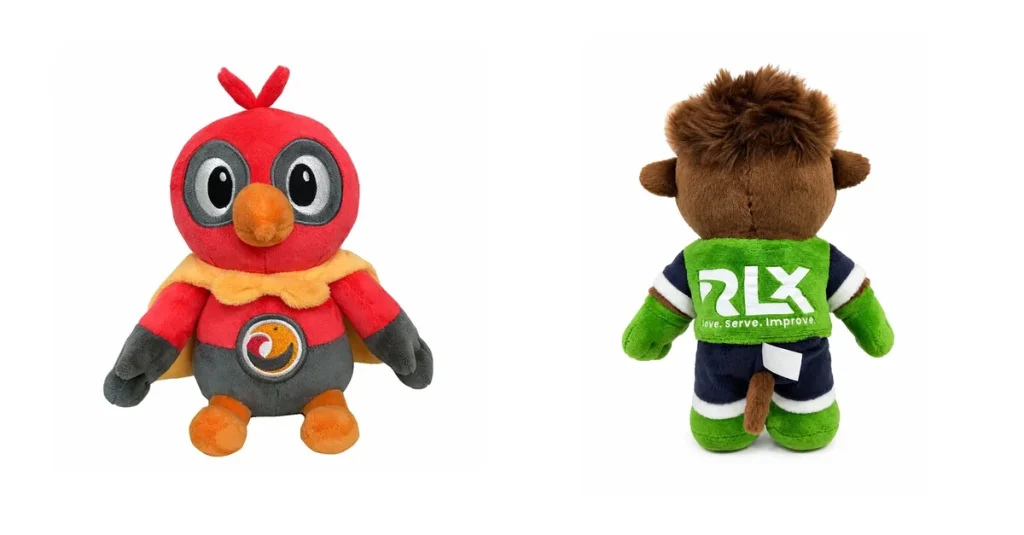
On custom plush toys, embroidery is often chosen for eyes, eyebrows, noses, mouths, paw details, and simple brand logos. Because the design is formed with thread rather than ink, embroidered details usually have a slightly raised texture and a more dimensional appearance.
Embroidery is especially popular for plush toys designed for babies and young children, since it can help avoid hard plastic accessories and support a softer, safer construction.
What Is Printing on a Custom Plush Toy?
Printing means applying artwork onto the fabric surface instead of creating it with stitches. This method is often used when the design includes complex graphics, multiple colors, gradients, fine lines, or small details that embroidery cannot reproduce clearly.
Depending on the design and material, printed details may be created by screen printing, heat transfer printing, or digital printing. The most suitable method depends on the fabric type, artwork complexity, and the required visual effect.
Printing is commonly used for clothing graphics, decorative patterns, detailed logos, character artwork, and other design elements that require more precision or color variation. These decoration methods are widely used in many custom stuffed animal projects, especially when the design includes clothing graphics or branded details.
Embroidery vs Printing: Key Differences
Both methods can work well in custom plush production, but they perform differently in several important areas.
Appearance and Texture
Embroidery creates a raised and textured effect. It can give facial features and logos a more crafted, premium, and dimensional look.
Printing creates a flatter result, but it can display more graphic information. It is often better for artwork that includes multiple colors, shading, gradients, or very small design elements.
In simple terms, embroidery adds texture, while printing offers greater visual flexibility.
Detail Accuracy
Embroidery works best for simple artwork with clear outlines and bold shapes. It is a strong option for cartoon-style facial expressions, clean logos, and basic decorative details.
Printing is usually better for designs with thin lines, layered colors, soft transitions, small lettering, or more intricate illustrations. If the goal is to reproduce the original artwork as accurately as possible, printing is often the better choice.
Durability
Embroidery is generally considered very durable because the design is stitched into the fabric itself. For visible areas that may be handled frequently, embroidery is often a reliable solution.
Printed details can also perform well, but durability depends on the printing method, fabric type, ink quality, and expected use conditions. In some cases, printing is highly effective. In others, embroidery may provide better long-term wear resistance.
For projects where long-term wear resistance matters, buyers should also review a plush toy quality checklist for importers before approving samples.
Safety and Product Type
For baby plush toys and products intended for younger children, embroidery is often preferred for facial features and similar details. It helps avoid hard components and supports safer plush construction.
Printing can also be used on children’s plush products, but the final choice should be reviewed based on the toy’s age grade, fabric choice, and compliance requirements.
Cost
Cost depends on the design itself, not only on the method.
Embroidery can be cost-effective for simple details with limited colors and clean shapes. However, if the embroidery area is large or highly complex, the stitch count increases and the cost may rise. Buyers comparing these options may also want to review the main factors that affect custom plush toy cost before finalizing decoration details.
Printing may be a more practical option for detailed graphics, colorful patterns, or artwork that would be difficult to embroider clearly. In those cases, printing can achieve better visual accuracy without the limits of thread density.
When Embroidery Is the Better Choice
Embroidery is often the better option when the design needs to be simple, durable, and slightly dimensional.
Typical examples include:
- eyes, eyebrows, noses, and mouths
- simple logos or text
- small decorative icons
- baby plush toys
- designs that need a classic or premium handcrafted look
- projects where durability matters more than graphic complexity
If the artwork is clean, bold, and easy to read, embroidery usually works very well.
When Printing Is the Better Choice
Printing is usually the better option when the artwork is more visually complex than embroidery can realistically reproduce.
Typical examples include:
- multicolor logos
- clothing graphics
- gradients and shading
- character illustrations
- small text and thin lines
- repeating decorative patterns
- designs that require accurate graphic reproduction
If preserving the original artwork is a priority, printing is often the more suitable choice.
Can Embroidery and Printing Be Combined?
Yes. In many custom plush projects, embroidery and printing are used together.
For example, a plush toy may use embroidered eyes and mouth for durability and softness, while using printed fabric for clothing details, decorative patterns, or complex graphics. Combining both methods often creates the best balance between appearance, cost, safety, and manufacturability.
How Manufacturers Choose the Best Option
A reliable plush toy manufacturer will normally recommend the best detail method based on:
- artwork complexity
- plush toy size
- fabric type
- target age group
- durability requirements
- budget
- production quantity
- branding and visual goals
In many cases, the final decision is made during the sampling stage. This allows the manufacturer to review the artwork, test suitable materials, and confirm the right detail method during sample approval before mass production.
Why This Choice Matters
Choosing between embroidery and printing is not only about appearance. It also affects production feasibility, consistency, safety, and cost control.
If the wrong method is chosen early in development, the sample may not match expectations, revisions may increase, and production costs may become less efficient. Understanding the difference helps buyers communicate more clearly with manufacturers and make better design decisions from the start.
Choosing the Right Option
There is no single best option between embroidery and printing for custom plush toys. The right choice depends on the artwork, fabric, target market, safety requirements, and the final look you want to achieve.
Embroidery is often the best choice for simple, durable, and safety-friendly details. Printing is often better for colorful, detailed, and graphically complex designs. In many projects, using both methods together produces the most practical and visually balanced result.
If you are developing a custom plush toy and are unsure which method suits your design, the best approach is to review the artwork during sampling and ask your manufacturer for a recommendation based on appearance, function, and production efficiency.